Cartoning, Case Packing & Palletizing
Cartoners, pick-and-place and wrap-around case packers, and robotic or cobot palletizers.
Also called cartoners, case packers, robotic palletizers and cobot palletizers.
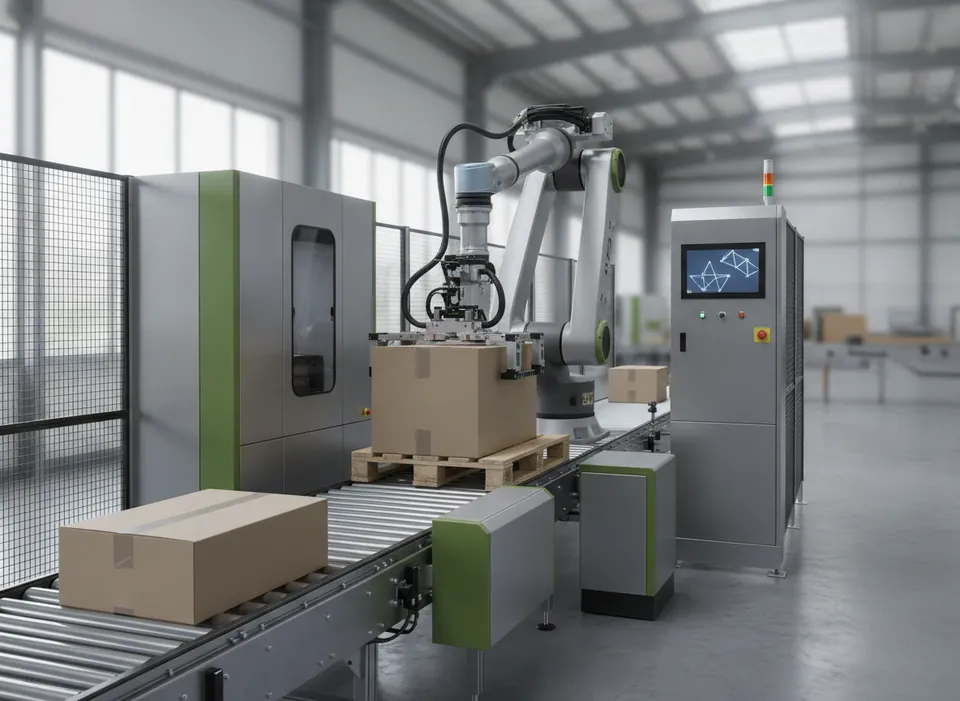
What these machines do
Secondary and tertiary packaging are where manual handling is heaviest. These machines load products into cartons, cartons into cases and cases onto pallets — steadily, shift after shift.
A cartoner erects a flat carton, inserts the product and leaflet, and closes the ends by tuck or hot melt. Case packers collate products and load them by pick-and-place, drop or wrap-around. Palletizers use a four-axis robot or a collaborative arm with a vacuum or clamp gripper to build the programmed layer pattern, adding slip sheets as needed.
Typical options
- Leaflet inserter
- Vision-guided picking
- Automatic pallet and slip-sheet dispenser
- Area scanners for fence-free cobot cells
Used in
Works on
Cartoning, Packing & Palletizing at work
A closer look at a typical installation. Ask us for a live demonstration on your own product.
Cartoning, Case Packing & Palletizing
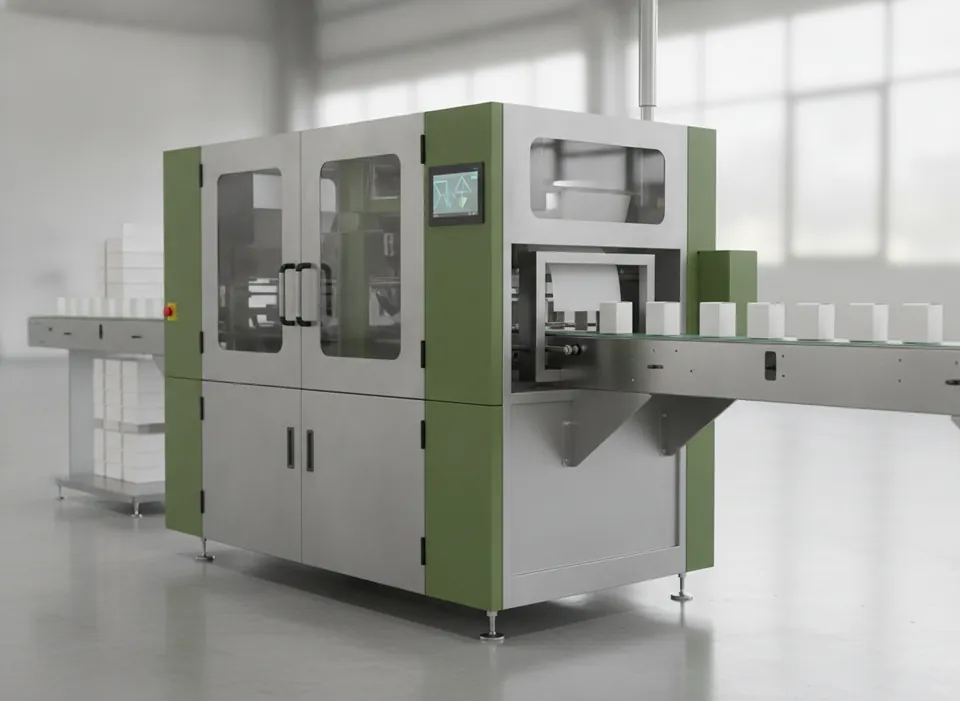
Horizontal Cartoning Machine
Inserts bottles, tubes, blisters and sachets into cartons.
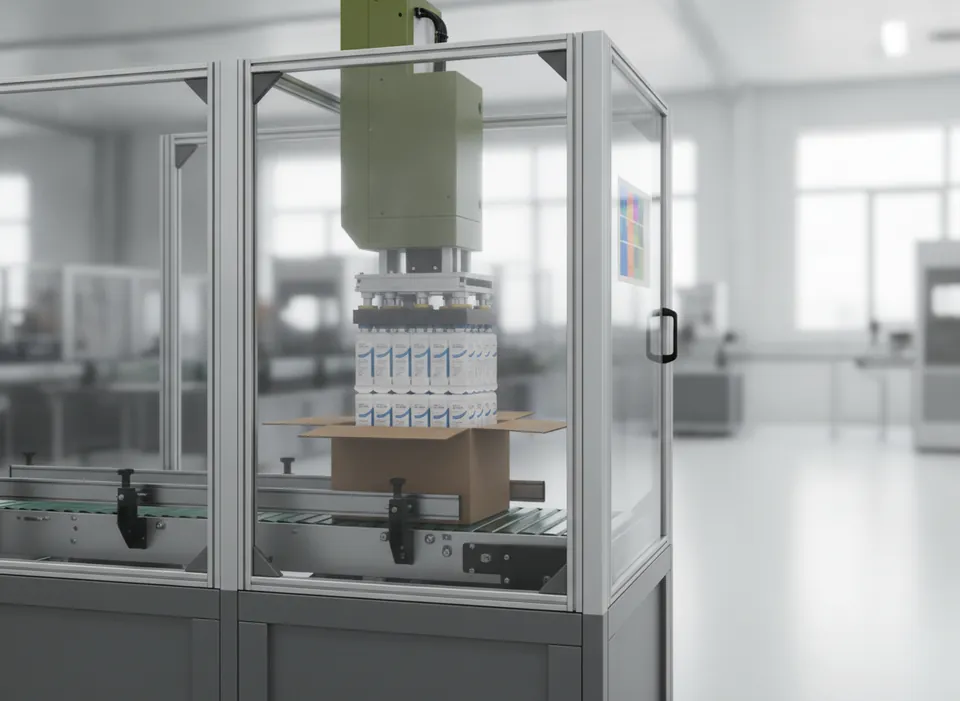
Pick-and-Place Case Packer
Gantry robot that top-loads products into cases.
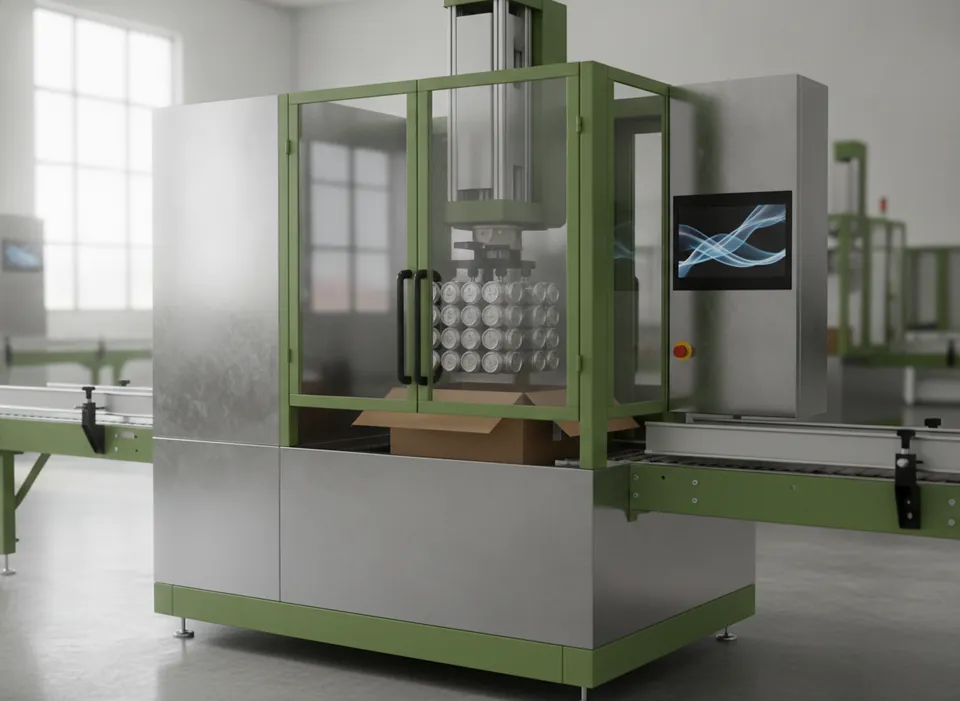
Wrap-Around Case Packer
Forms the case around the product from a flat blank.
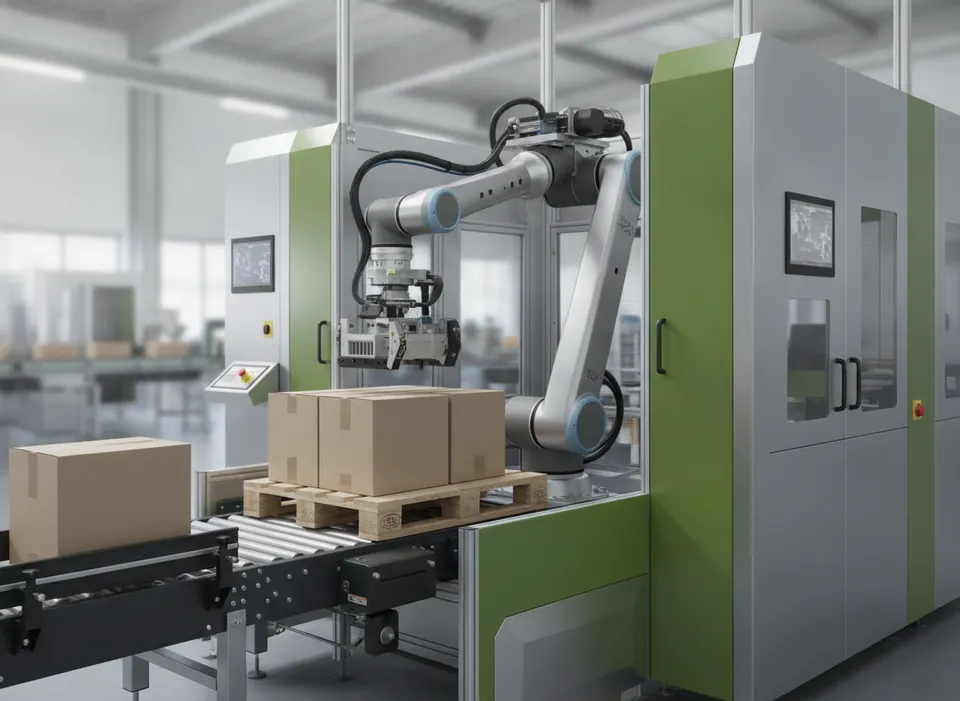
Robotic Palletizer
Four-axis robot that stacks cases, bags and trays.
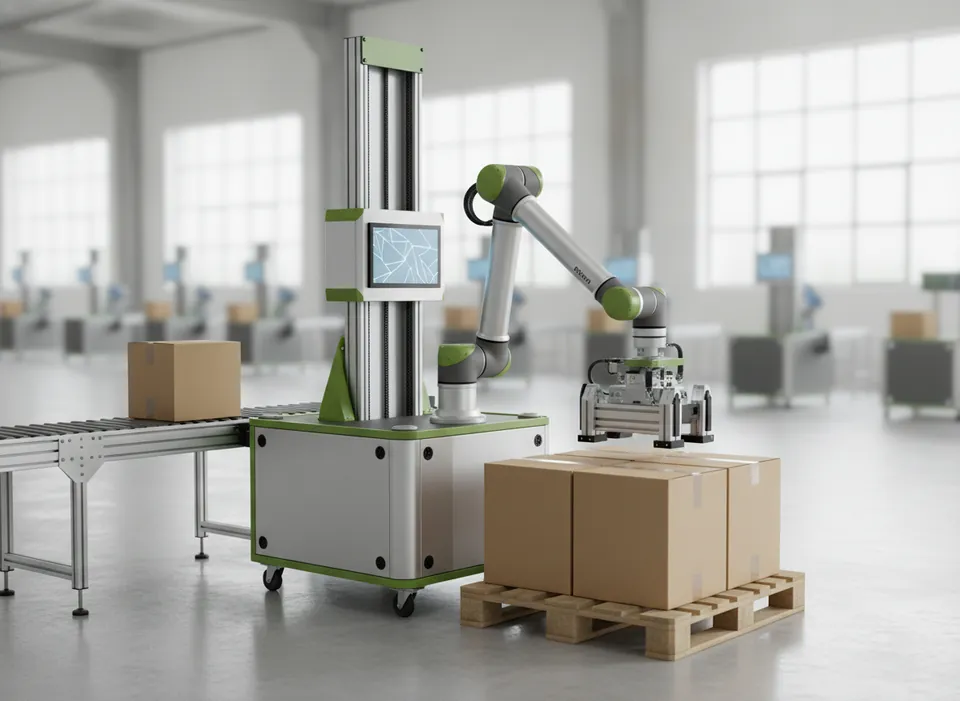
Collaborative Robot Palletizer
Compact, fence-free palletizing cell on a mobile base.
Models at a glance
| Model | Machine | Function | Format range | Speed | Payload |
|---|---|---|---|---|---|
| EL-C120 | Horizontal Cartoning Machine | Automatic horizontal cartoner | Cartons 60–200 × 20–90 × 15–70 mm | Up to 120 cartons/min | Products up to 500 g |
| EL-P15 | Pick-and-Place Case Packer | Top-load pick-and-place case packer | Cases 200–600 × 150–400 × 100–400 mm | Up to 15 cases/min | Up to 25 kg per pick |
| EL-W20 | Wrap-Around Case Packer | Wrap-around case packer, hot-melt | Cases 180–450 × 120–350 × 100–350 mm | Up to 20 cases/min | Collations up to 20 kg |
| EL-R25 | Robotic Palletizer | Four-axis robotic palletizer | Pallets up to 1,200 × 1,200 mm, stack to 2,200 mm | Up to 25 cases/min (multi-pick) | 80–180 kg at the wrist |
| EL-CB10 | Collaborative Robot Palletizer | Collaborative robot palletizer | Two pallet positions, stack to 2,000 mm with lift column | Up to 10 cases/min | Up to 20 kg including gripper |
Typical configurations. Final values are confirmed in your quotation.
Process sequence
Collate
Products are grouped into the pack pattern.
Erect
The carton or case is formed from a flat blank.
Load
A pusher or robot places the collation into the pack.
Close
Flaps are tucked, taped or glued and the pack is coded.
Palletize
A robot stacks cases to the pallet pattern.
Common questions
Cobot or industrial robot palletizer?
How long does a format change take?
Where is the pack coded?
Tell us about your product
Send a sample, a drawing or just a description. We will recommend the right machine and show you the result.