Start with the material
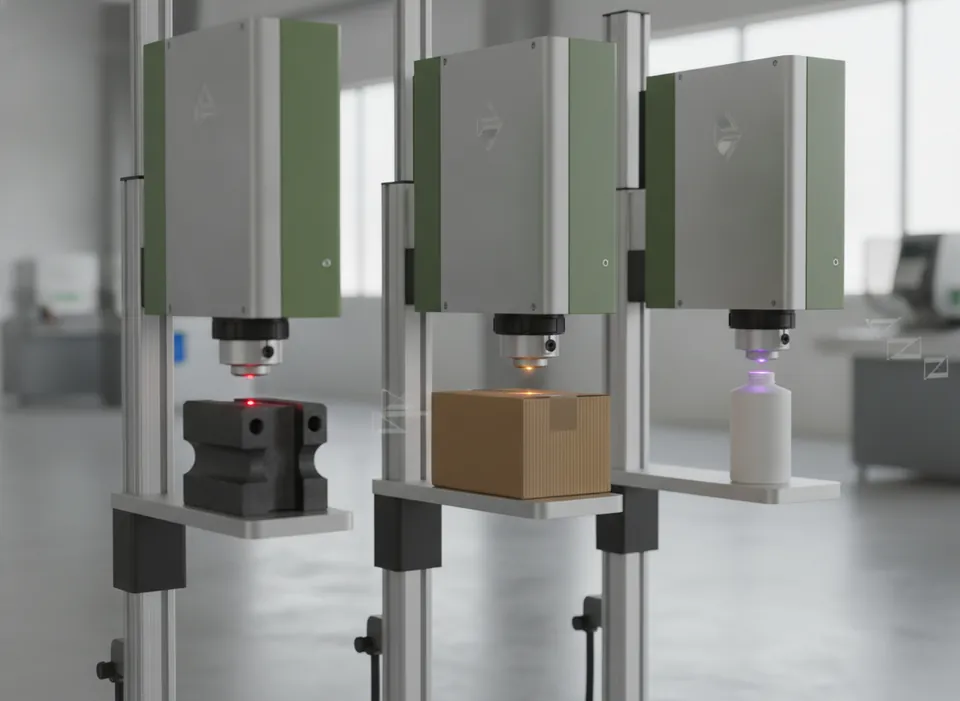
A laser only marks what absorbs its light. Metals absorb the 1064 nm output of a fiber laser well. Organic materials — paper, board, wood, glass, many plastics — absorb the 9–11 µm output of a CO2 laser. Most polymers absorb 355 nm ultraviolet light in a very thin surface layer, which is why UV lasers mark plastics so cleanly.
Fiber: metals and dark plastics
Fiber lasers are compact, air-cooled and efficient. They anneal, engrave and ablate metals, and mark many engineering plastics. They struggle on transparent materials and on light-coloured polyolefins without additives.
CO2: packaging and organics
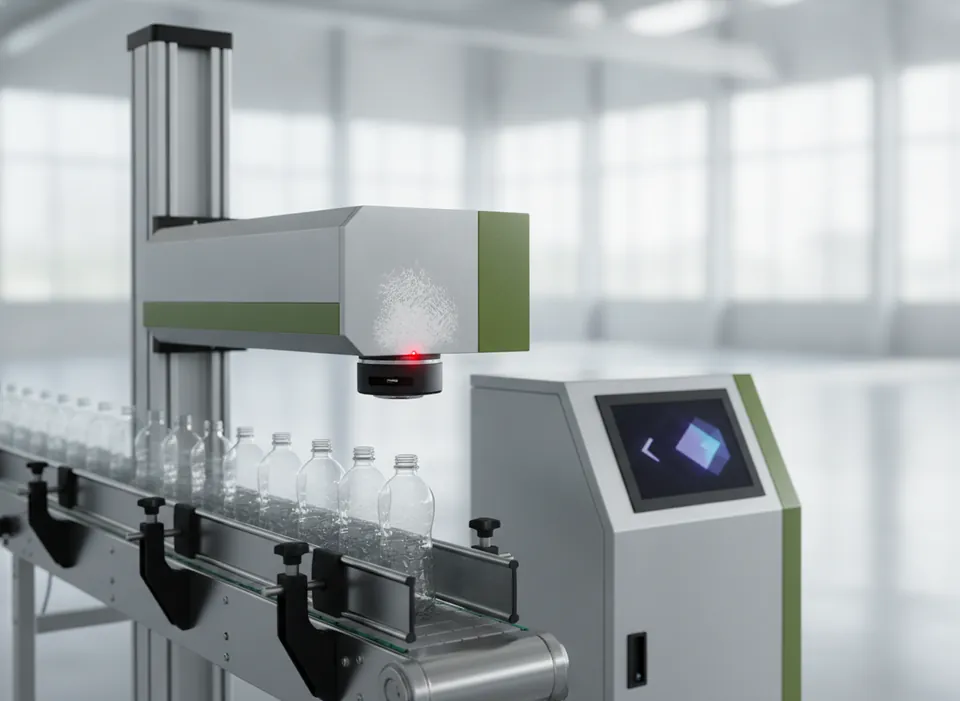
CO2 lasers are the mainstream choice for date coding on cartons, labels, PET and glass. They are fast and economical, but they cannot mark bare metal.
UV: cold marking
UV lasers cost more per watt but produce high-contrast marks with almost no heat. They are chosen for white HDPE, flexible film, medical plastics, cable jackets and electronics.
Then check speed and integration
Once the wavelength is settled, power sets the speed. Ask for sample marks on your own material at your line speed, and check the mounting space, extraction and safety guarding needed.