5 L Extrusion Blow Moulding Machine
HDPE and PP bottles and containers up to 5 litres.
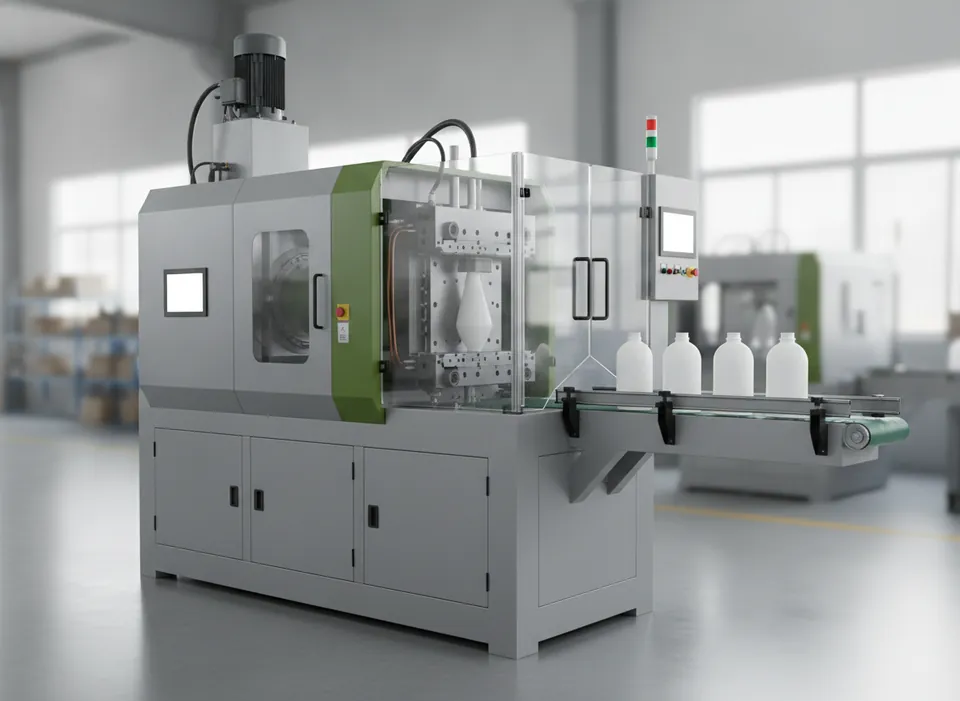
Built around your product
A single- or double-station shuttle machine for detergent, lubricant, dairy and personal-care bottles. Parison programming optimises wall thickness and saves resin.
In extrusion blow moulding a tube of molten plastic — the parison — is captured by a mould and inflated. Stretch blow moulding reheats an injection-moulded PET preform, stretches it with a rod and blows it at high pressure, giving a strong, clear bottle. Injection blow moulding forms the neck by injection first, then blows the body, producing scrap-free containers with accurate necks.
Key features
- 100-point parison wall-thickness control
- Automatic deflashing in the machine
- View-stripe and multi-layer head options
- Inline leak tester and laser coder ready
Process sequence
Plasticise
Resin is melted in the extruder, or preforms are reheated.
Form
A parison is extruded or the preform is transferred to the mould.
Blow
Compressed air inflates the plastic against the cooled mould.
Cool & eject
The container sets, the mould opens and the part is removed.
Trim & test
Flash is removed and bottles are leak-tested and coded.
Machine video
A closer look at a typical blow moulding installation. Ask us for a live demonstration of the BM-E5 on your own product.
Specifications
| Model | BM-E5 |
|---|---|
| Process | Continuous extrusion blow moulding |
| Max container volume | 5 L |
| Cavities | 1–4 |
| Output | Up to 1,200 bottles/hour (1 L, 4 cavities) |
| Clamping force | 80 kN |
| Extruder / preform | Ø 70 mm screw, L/D 24 |
| Installed power | 45 kW |
| Air supply | 0.8 m³/min at 8 bar |
Typical configuration. Final values depend on your product and are confirmed in the quotation.
Add-ons
- Parison wall-thickness control
- In-mould labelling
- Inline leak tester
- Laser coder for mould and date marking
Suitable materials and packs
Questions
Which process suits which bottle?
How are blown bottles coded?
What utilities are needed?
Get a proposal for this machine
- Application review by an engineer — material, code and line speed
- Trial marking, printing or packing on your own samples
- Quotation with layout, lead time, installation and service
Prefer to talk? Email info@motionworksrobotics.com or call +91 98100 93680.
Ask about this machine
More blow moulding machines
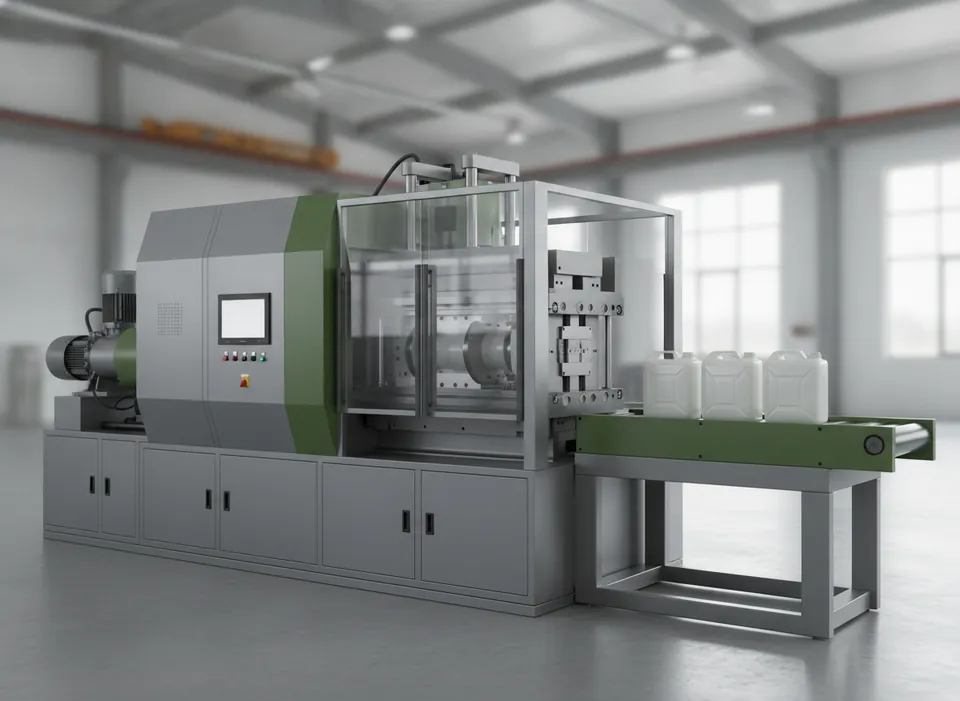
30 L Extrusion Blow Moulding Machine
Jerrycans, drums and technical parts up to 30 litres.
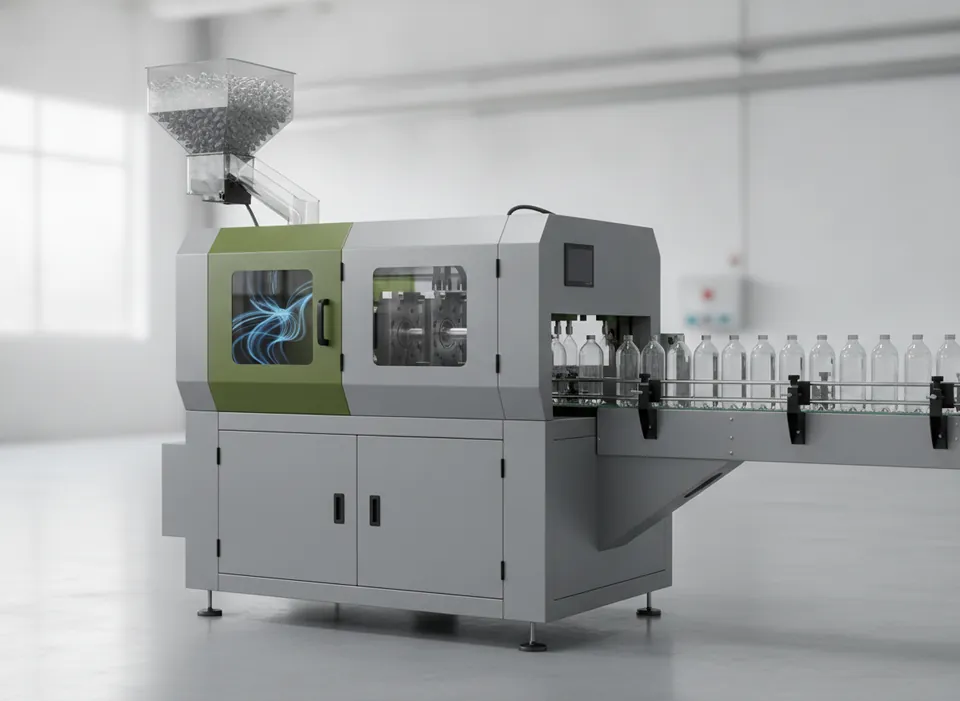
4-Cavity PET Stretch Blow Moulding Machine
PET bottles for water, drinks, oil and personal care.
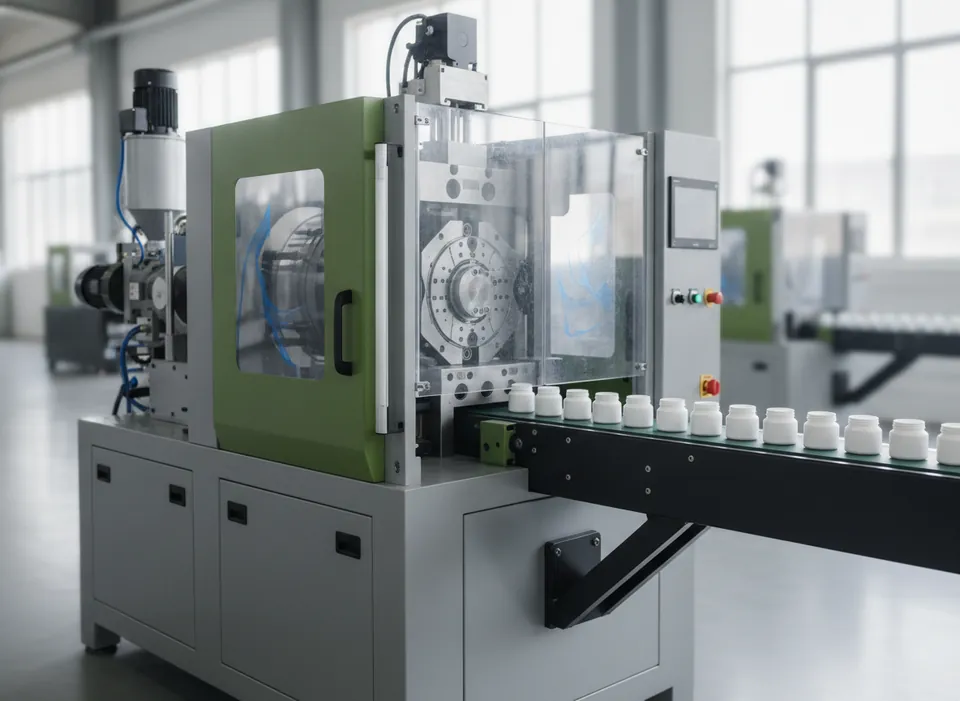
Injection Blow Moulding Machine
Scrap-free small containers with precise necks.